
Basement insulation in Bozeman MT - warm walls with the water fixed first
Cold floors over the basement, or a damp, musty corner down there? We find the water first, then insulate the walls so the space is warmer and drier.
How do I insulate my basement without causing a moisture problem?
Basement insulation in Bozeman means adding insulation to your foundation walls, from the inside or the outside, so the floor above stops feeling cold and the basement becomes a room you'd actually use. It's a job for a pro, because walls insulated the wrong way can damage the foundation itself.
Most people call me about cold floors, a basement they want to finish, or a musty smell they've been ignoring for a few winters. The price and the schedule mostly turn on which side of the wall we work from, how much wall there is and whether a leak has to be fixed before anything goes up, and your written estimate puts those in order for your house.
We're fully licensed and insured, which matters here because Montana requires every construction contractor to be licensed with the state Department of Labor & Industry.
- We insulate the foundation walls from the inside or the outside, depending on your house and plans.
- We air seal and insulate the rim joists, the framing on top of the foundation, against condensation.
- Downspouts and other water sources should drain away from the walls before any insulation goes on.
What happens when you call about basement insulation in Bozeman?
I look at every basement myself before anyone talks numbers, because what the water is doing decides the rest. Here's how it goes, from your first call to the walk-through at the end.
Call or send the form
Call (406) 414-0411 or fill out the form, and we'll set up a time for me to come out. Tell us if you've seen water on the floor or stains on the walls, since that shapes the visit.
I come out and look
I check the walls for water coming in, look at the rim joists and note anything that has to be fixed before we insulate. It's also a good time to tell me what you want the basement to become.
You get a written estimate
The estimate says what we'd do, in what order and why, so you can see where the money goes before you agree to anything. If a leak needs fixing first, it's listed as step one.
We insulate, then walk through
A small crew led by our lead installer does the work, I'm on most jobs too, and if the city needs to inspect before the walls get covered, we plan the days around it. When we're done, we walk through it with you and leave the basement swept.
What basement insulation looks like on the wall
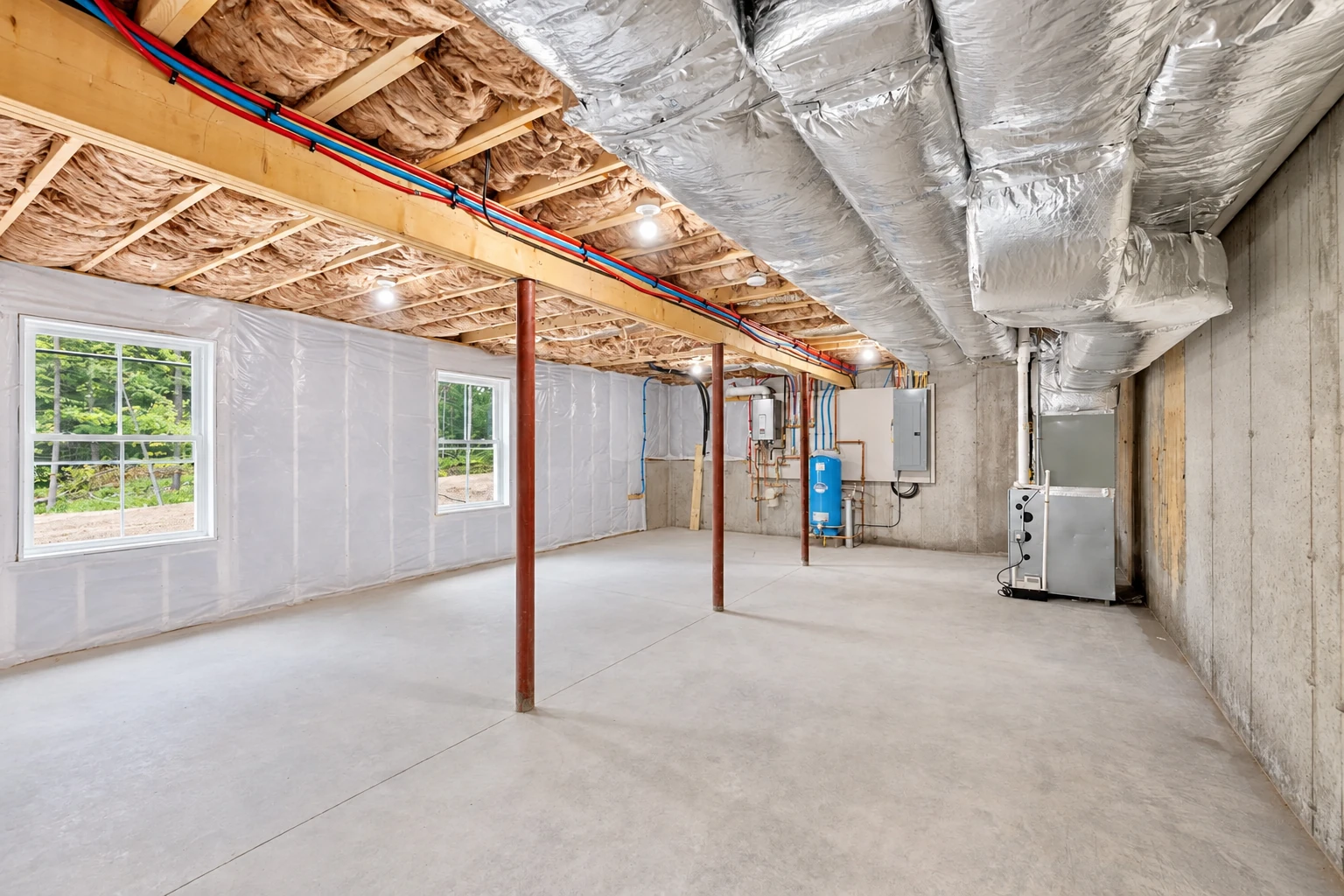
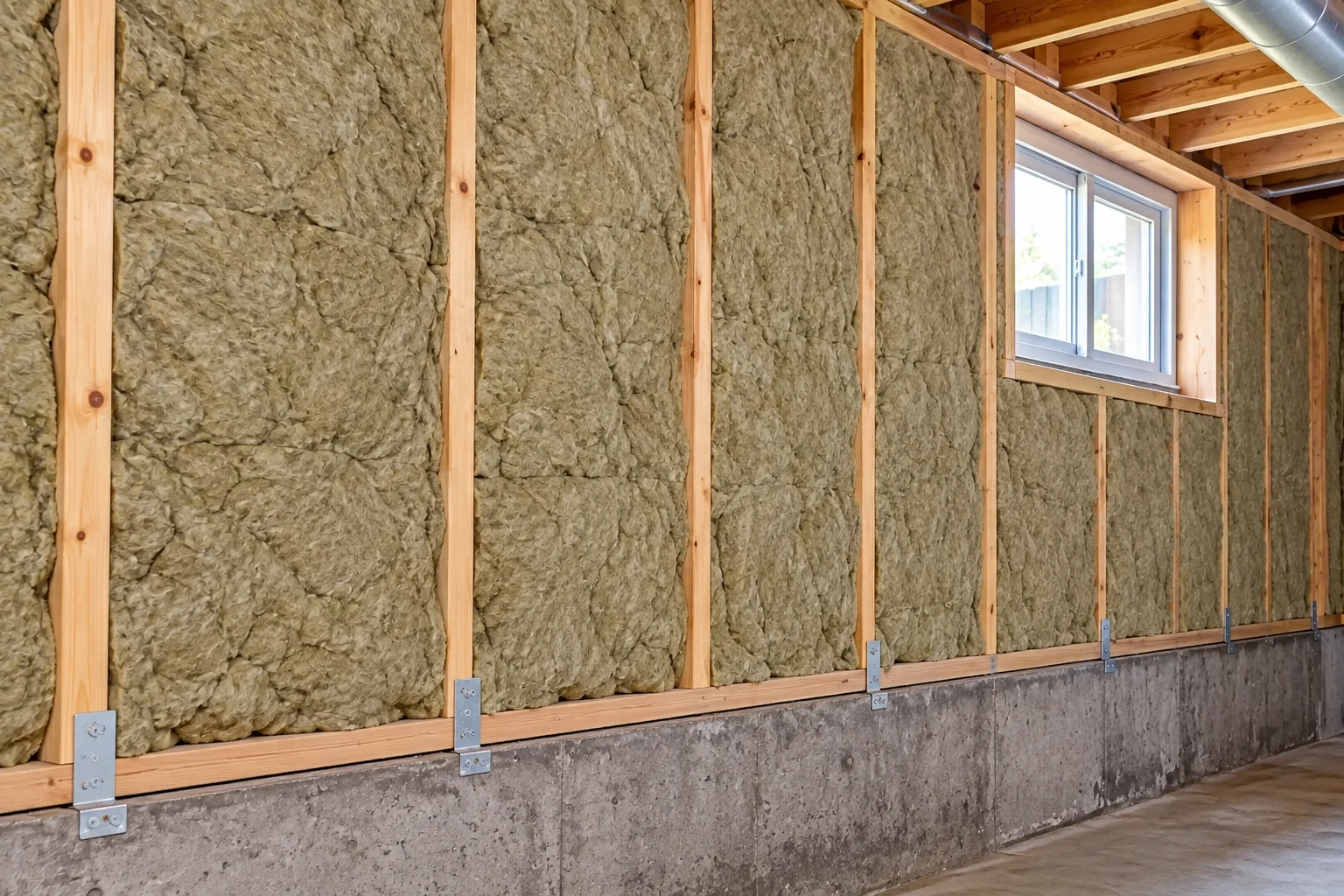
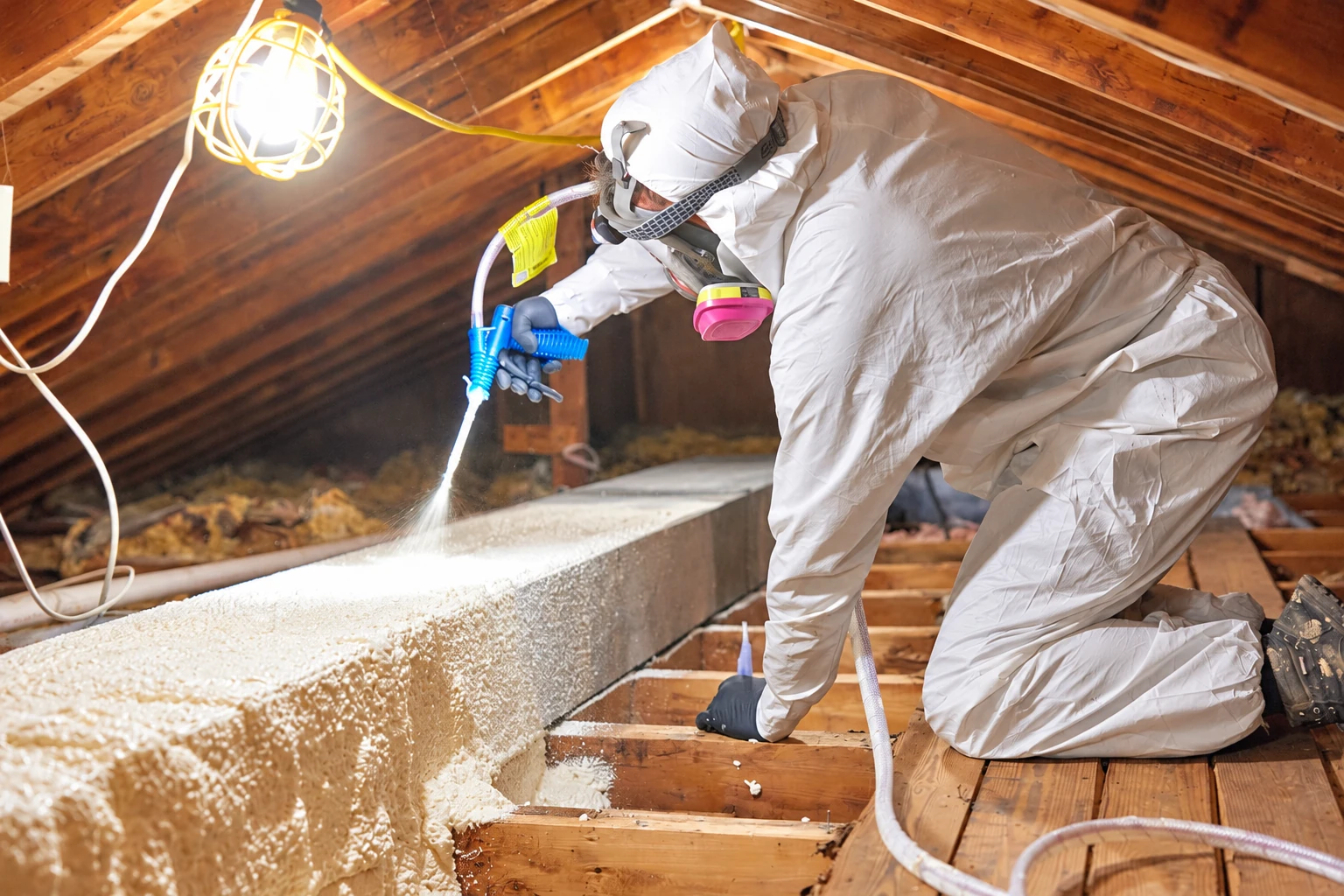
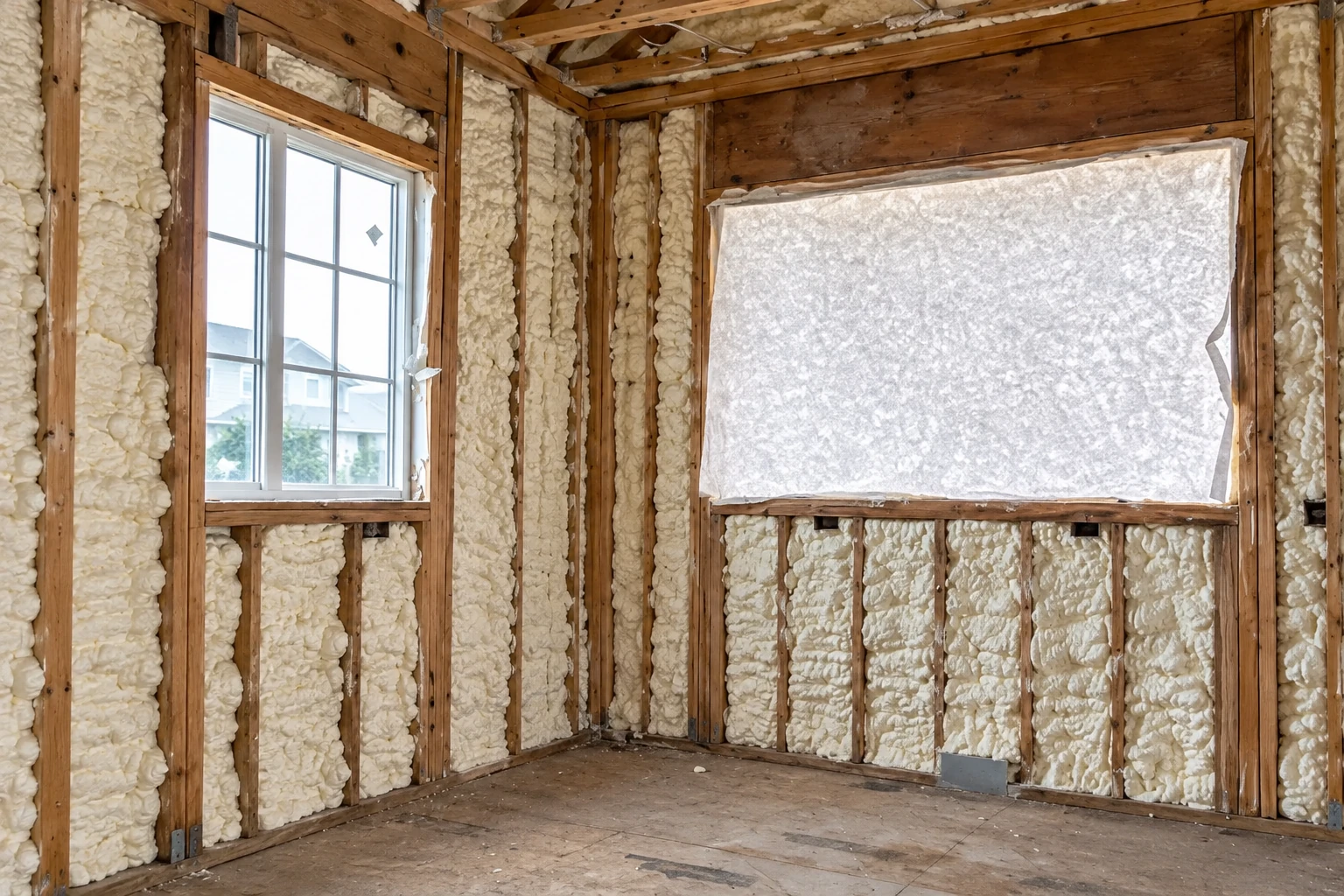
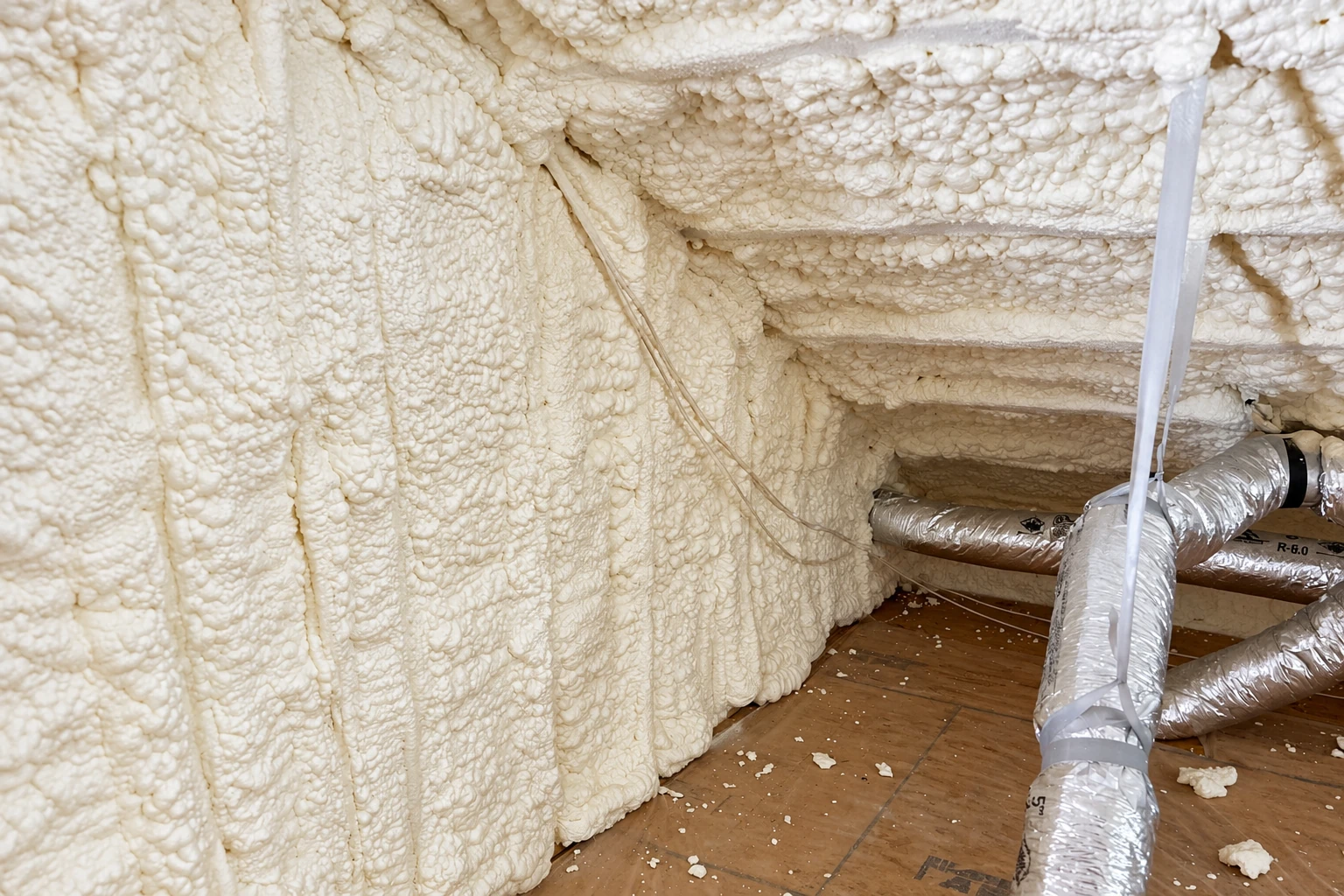
These photos show the materials and steps that go into a basement job, from foam board on concrete to sealed rim joists. They show the trade in general, not your house or one of our jobs.
Thick white spray foam coats the underside of a roof, covering the rafters and a crossbeam.
White spray foam fills the roof framing around exposed wooden beams and bundled black cables.
Loose-fill insulation blankets an attic floor beneath exposed wooden roof trusses.
White spray foam covers the roof sheathing between exposed wooden trusses in an attic.
A worker in protective gear guides a large hose through loose attic insulation during removal.
A crawl space has a white vapor barrier across the floor, insulated walls, black ductwork, and exposed plumbing.
Get a written plan for your basement walls
Send the form with your address and any signs of water, and we reply within 1 business day to set up a free visit on site. I look at the basement myself, then you get a written estimate, obligation-free.
(406) 414-0411Basement insulation questions we hear in Bozeman
These are the questions people ask me most while we're standing in their basement. If yours isn't here, call and ask, because the answer usually comes down to what's behind your walls.
What is the best way to insulate basement walls, inside or outside?
Outside is the better choice when you can get to it, because insulation on the outside of basement walls controls moisture, saves energy and, in very cold places like Bozeman, protects the foundation from freezing and thawing. When the foundation isn't being dug out anyway, an inside job with the right materials works well, and I'll tell you which fits your house.
Can fiberglass insulation go right against concrete basement walls?
No, fiberglass or cellulose against a basement wall can soak up a lot of moisture and stay damp. A plastic vapor barrier over it on the inside makes things worse, because it traps that moisture in the wall. Whoever you hire for an inside job, ask how their materials will stay dry.
Does foam insulation in a basement have to be covered with drywall?
Yes, foam on basement walls needs a layer of drywall over it to meet building code as a thermal barrier, according to the Department of Energy's installer guidance. If we use foam in your basement, that covering is part of the plan, so it won't be a surprise later.
How much does basement insulation cost in Bozeman?
We don't post a price, because two basements the same size can need very different work once I've checked for water. A leak repair, working from the outside, a lot of wall or rim joist and the foam and drywall you choose all push it up, while a dry basement insulated from the inside keeps it down. Your written estimate gives you the number and what it covers.
Do I need a permit to insulate my basement in Bozeman?
Ask before work starts, because the City of Bozeman uses building permits to track and inspect work, and its building inspectors need to see anything that will be covered in a construction or remodeling project. We check with the city or county building office on every job and handle the permit when one's needed. For questions about your own project, the city's residential plan examiners take daily appointments for general code and permit guidance.
How long does basement insulation take in Bozeman?
Most of the wait usually comes before the insulation, because a leak has to be fixed and the walls need to be dry before we cover anything. After that, the schedule turns on how much wall there is and when the inspector can see the work before drywall goes up. Your estimate lays out the order so you can plan around it.
Basement insulation in Bozeman and nearby cities
Bozeman sits in Montana's cold, dry climate zone, and most basement calls we get here start with cold floors or a damp corner by the foundation. We do the same work in Belgrade, Livingston and the cities around them.