
Closed-cell foam insulation in Bozeman MT - sealed, warmer basement walls and rim joists
Cold basement walls or a draft along the floor edge? We spray dense foam that stops air and moisture, then cover it right.
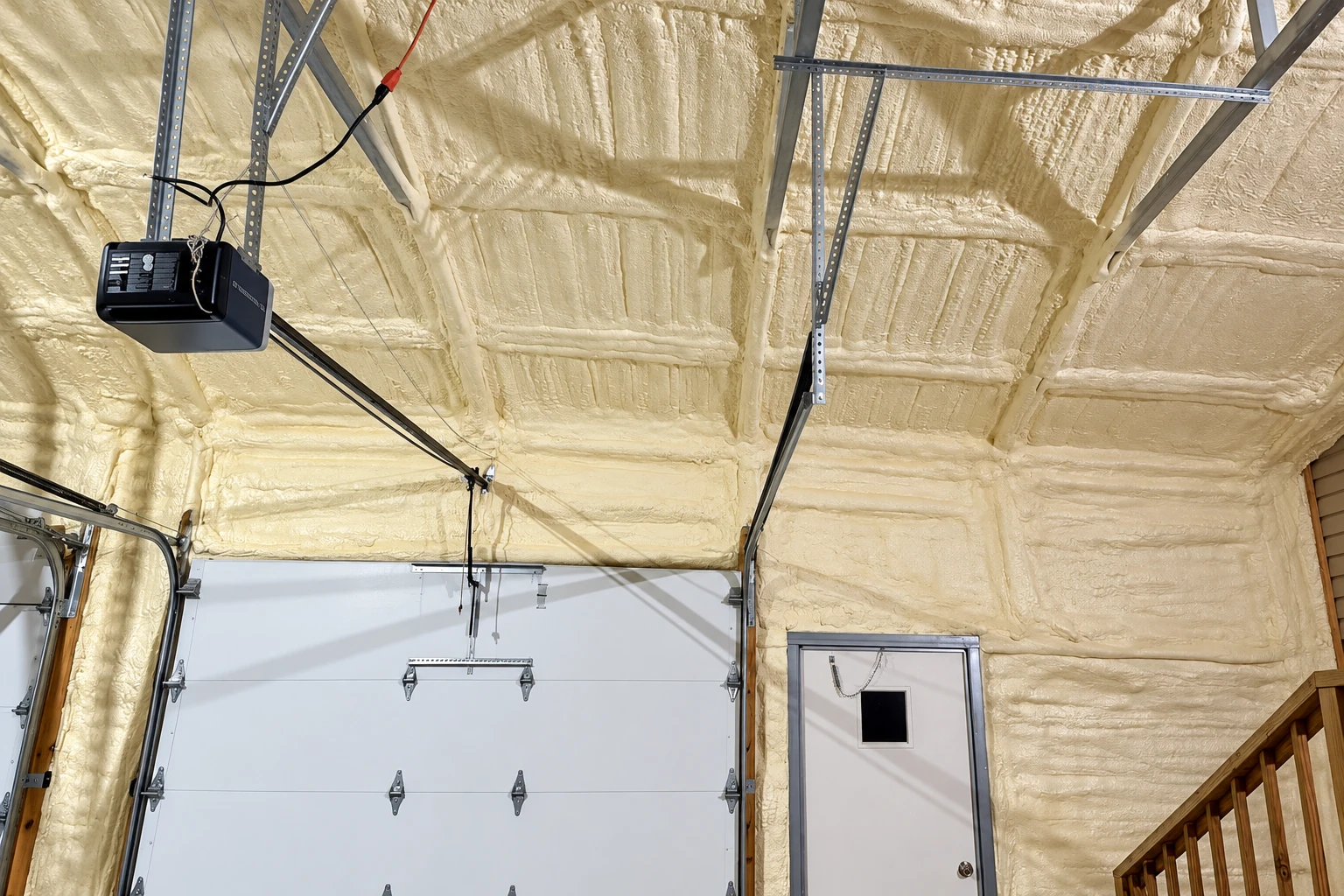
Is closed-cell foam worth the extra cost in your Bozeman basement?
Closed-cell foam insulation in Bozeman is a dense foam we spray onto basement walls and rim joists, where it cures rigid and seals air, slows heat and blocks moisture in a single layer.
Most calls for closed-cell foam start in the basement, with walls that feel cold and clammy or a draft along the top of the foundation where the floor framing sits. Foam fits there because it seals and insulates in one layer. In an attic, though, sealing the gaps and topping up loose fill usually beats foam unless your ductwork runs up there, and I'd rather tell you that than sell you foam you don't need.
The price moves with how much wall and rim joist we're foaming, how thick it goes on, what has to be fixed or pulled out first, and what covering goes over it. The schedule turns on those fixes, any permit and inspection, and your time out of the house, and the written estimate lays out both for your job. We're fully licensed and insured, and Montana now requires every construction contractor to be licensed with the state Department of Labor & Industry, so it's a fair thing to ask anyone you call.
- We fix leaks or rot before foam covers anything, because foam hides problems very well.
- We cover your stored things and floors, and clean up overspray and scraps before we leave.
- We check what's on the walls now and pull old batts if foam can't go over them.
What happens after you call about closed-cell foam in Bozeman
Here's how a closed-cell foam job runs with us, from your call to the walk-through. I look at the space myself first, because the order of the work matters as much as the foam.
Call or send the form
Call (406) 414-0411 or send the form, and tell us what you want foamed, like basement walls or rim joists, and whether that space is lived in. It's also a good time to ask how we handle safety during the spray.
I come out and look
I look at the walls and rim joists myself and note anything that has to be fixed before foam covers it, like a leak or soft wood. You get a written estimate that says what we'd do and in what order, so you see your price before anything starts.
Our crew sprays the foam
A small crew led by our lead installer does the spraying, and I'm on most jobs too. We plan your time out of the house before spray day, so you know when to leave and when you can come back.
Covering, cleanup and walk-through
We put the planned covering over the foam and clean up behind ourselves. Then we walk through the finished job with you, wall by wall.
What closed-cell foam looks like on basement walls and rim joists
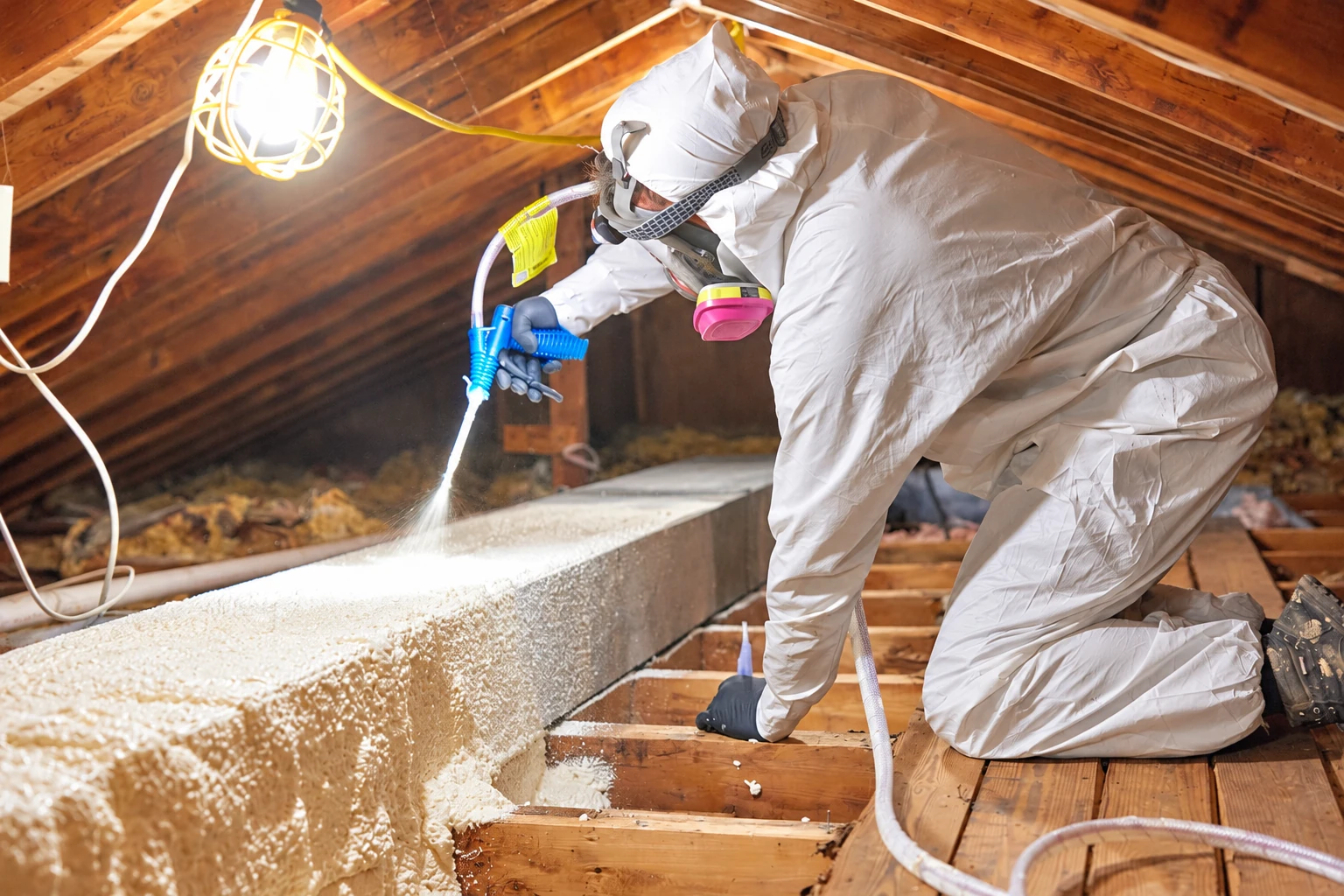
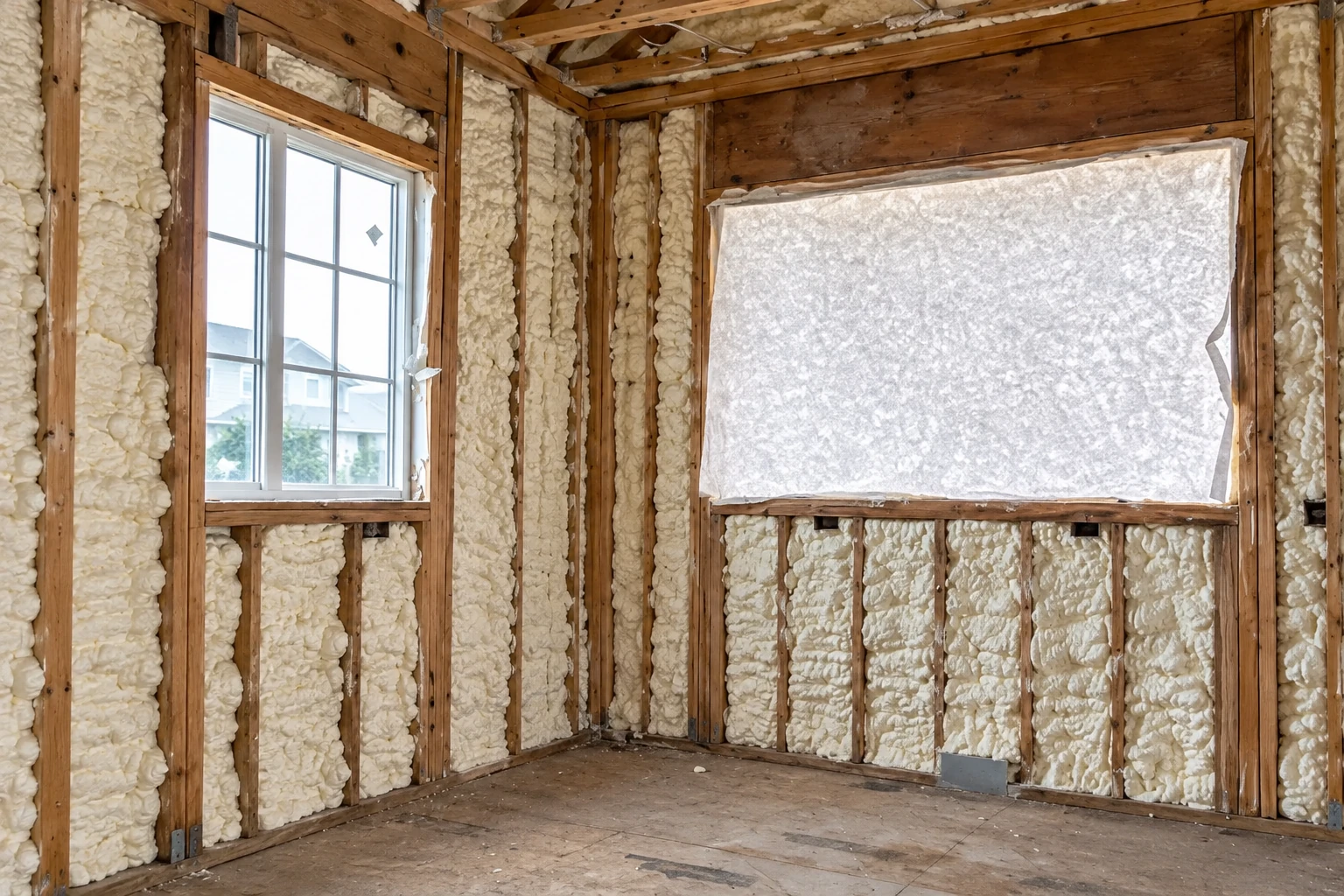
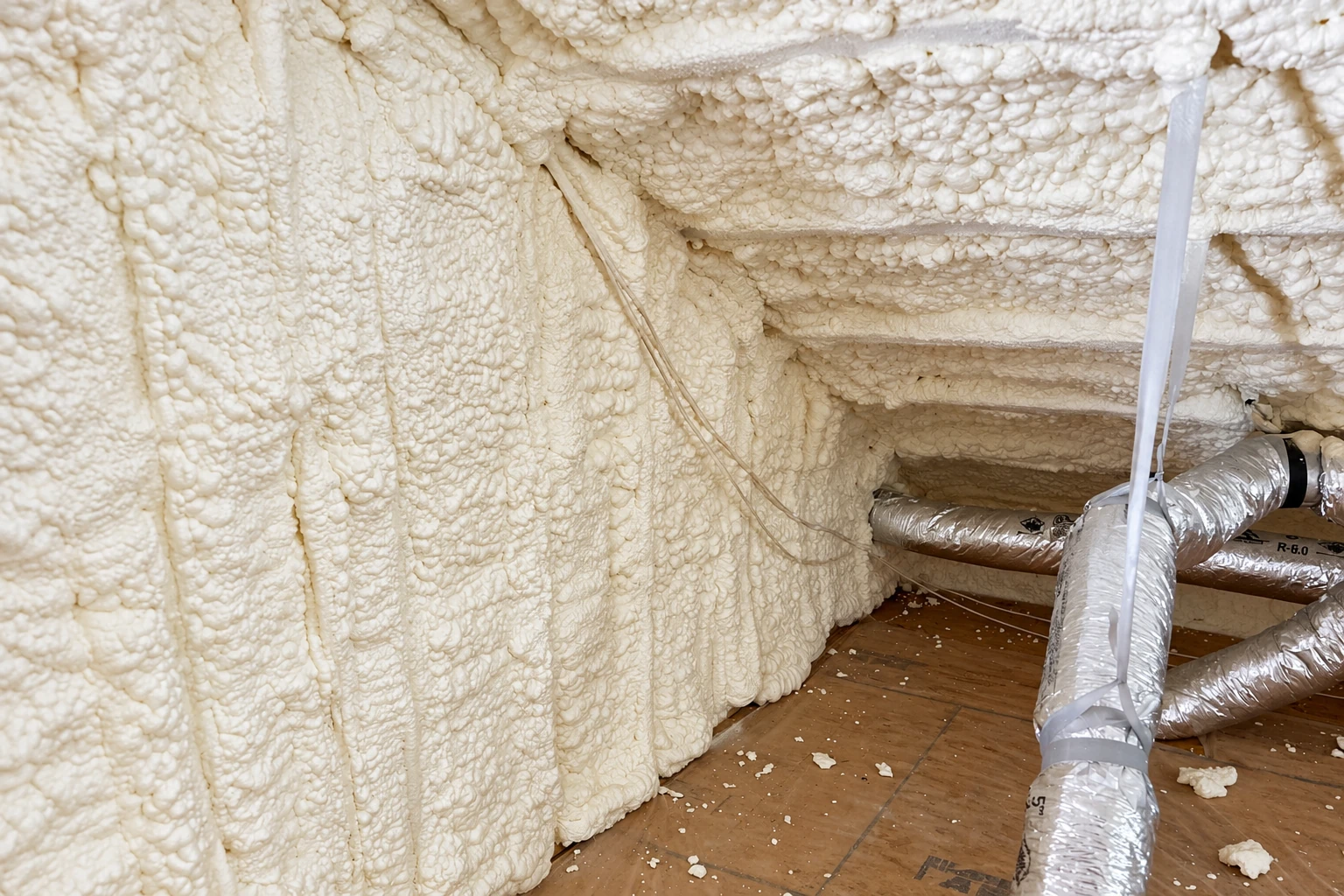
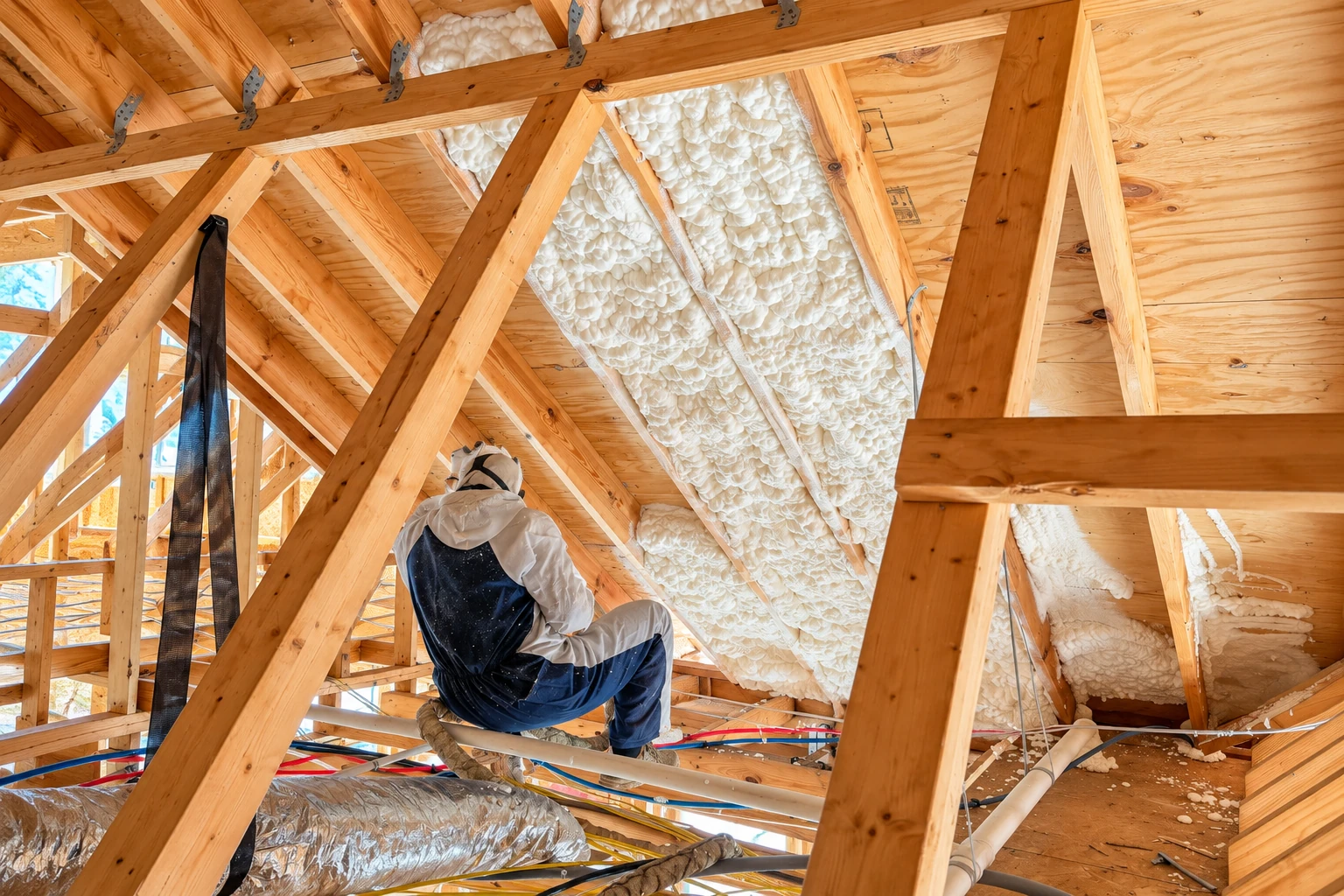
These photos show closed-cell foam as it usually goes in, sprayed on concrete basement walls and into the rim joists along the top. It cures hard and rigid, which is how you tell it from softer open-cell foam.
Thick white spray foam coats the underside of a roof, covering the rafters and a crossbeam.
White spray foam fills the roof framing around exposed wooden beams and bundled black cables.
Loose-fill insulation blankets an attic floor beneath exposed wooden roof trusses.
White spray foam covers the roof sheathing between exposed wooden trusses in an attic.
A worker in protective gear guides a large hose through loose attic insulation during removal.
A crawl space has a white vapor barrier across the floor, insulated walls, black ductwork, and exposed plumbing.
Get a written plan for foaming your basement walls or rim joists
Send the form or call (406) 414-0411 and we'll reply within one business day to set a time for me to come out. The on-site estimate is free with no obligation, and you get it in writing.
(406) 414-0411Closed-cell foam questions we hear from Bozeman homeowners
These are the questions people in Bozeman usually ask before a foam job, from which foam fits a basement to how long you'll be out of the house. If yours isn't here, call and ask.
What is the best way to insulate basement walls, closed-cell or open-cell foam?
For basement walls where moisture is the worry, closed-cell foam is usually the better pick, because it gives the best moisture control of the insulations used on the inside of foundation walls and it's an excellent air barrier. Open-cell foam seals air well too, but it has to go on much thicker before it protects against vapor.
How much more does closed-cell spray foam cost than open-cell foam?
Closed-cell foam costs more to install than open-cell, mainly because it expands less and takes more material to fill the same space. What you get for that is a foam that's rigid and far harder to crush, and your written estimate shows the number for your walls.
Does closed-cell spray foam need to be covered in a basement?
Yes, federal building guidance says spray foam on basement walls has to be covered with ignition-barrier paint, a fire-resistant coating, or with drywall. Energy Department guidance adds that rim-joist foam needs a thermal barrier, a fire-slowing layer such as drywall, when it's more than 3.25 inches thick or the space is a room you live in. We plan that covering into the estimate, and the city has the final word on Bozeman's own rules.
How long do you have to stay out of the house after spray foam insulation?
Plan on at least 24 hours away, because federal consumer safety staff advise leaving the home during the spray and for at least a day after. EPA guidance says not to move back in until the foam has finished curing and the house has been aired out and cleaned well. We go over your re-entry time, when it's safe to come back, before spray day so you can line up a place for everyone, kids and pets included.
Does the time of year matter for spray foam insulation in Bozeman?
It can, because temperature and humidity affect how spray foam goes on, and federal safety staff suggest asking your contractor what season suits the job where you live. I'll go over that at the estimate for your space, and we schedule the spray around it.
Who do I call about permits for spray foam insulation in Bozeman?
Bozeman's Building Division answers questions about permits, plans and inspections at 406-582-2375, extension 1. Applications sent in on or after January 1, 2027 have to meet newer building codes, so a project planned around then may fall under them. If you have questions about your own project, we'll point you to the right office.
Closed-cell foam insulation in Bozeman and nearby cities
Bozeman's building office handles permits and inspects work before it's covered, so we check each foam job with the city and handle the permit when one's needed. We're based in Bozeman and work in nearby cities like Belgrade and Livingston.