
Blown-in insulation in Bozeman MT - an even layer that keeps upstairs warm
Cold rooms upstairs or a power bill that climbs every winter? We seal the gaps first, then blow insulation evenly across the whole attic.
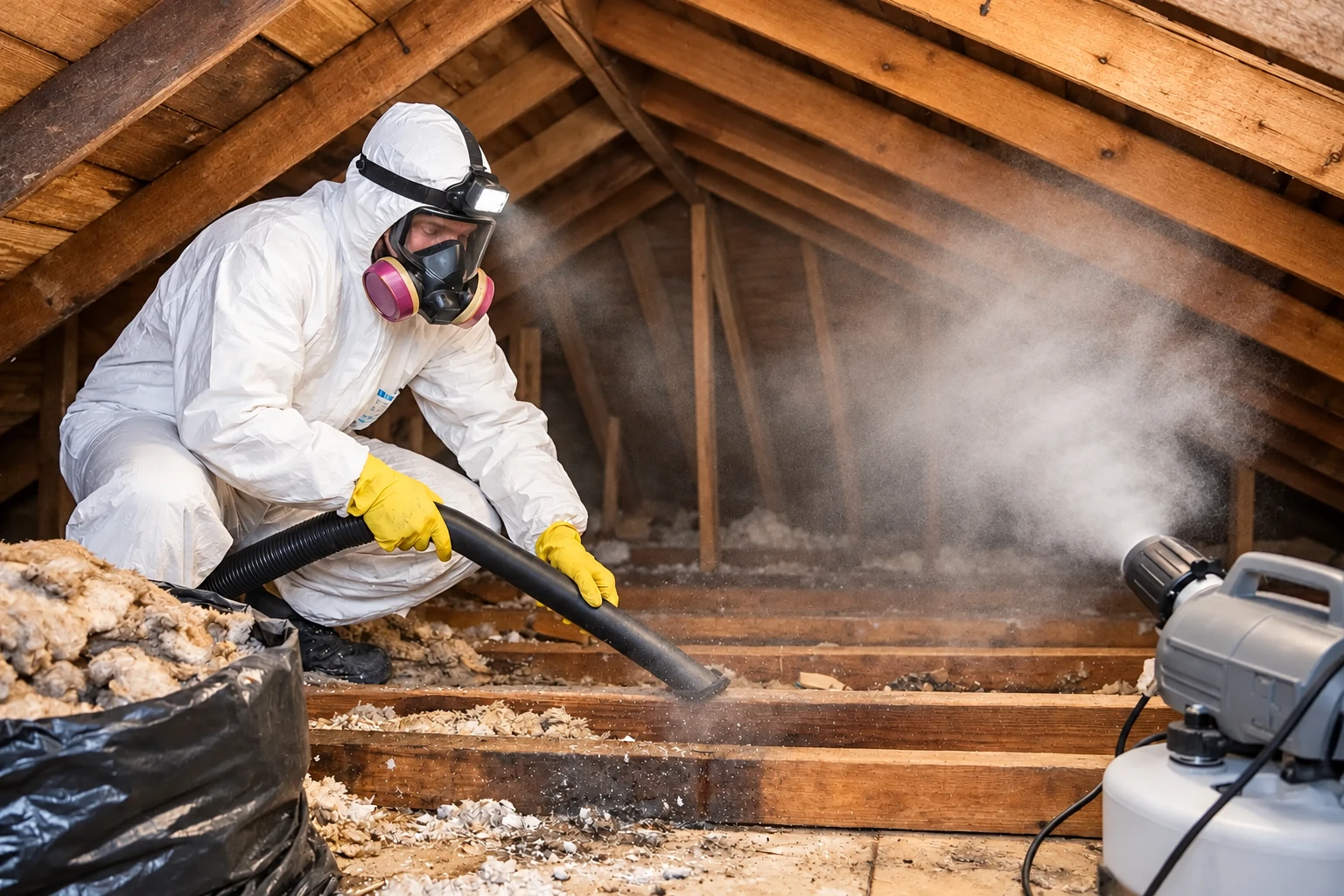
Is blown-in insulation right for my attic?
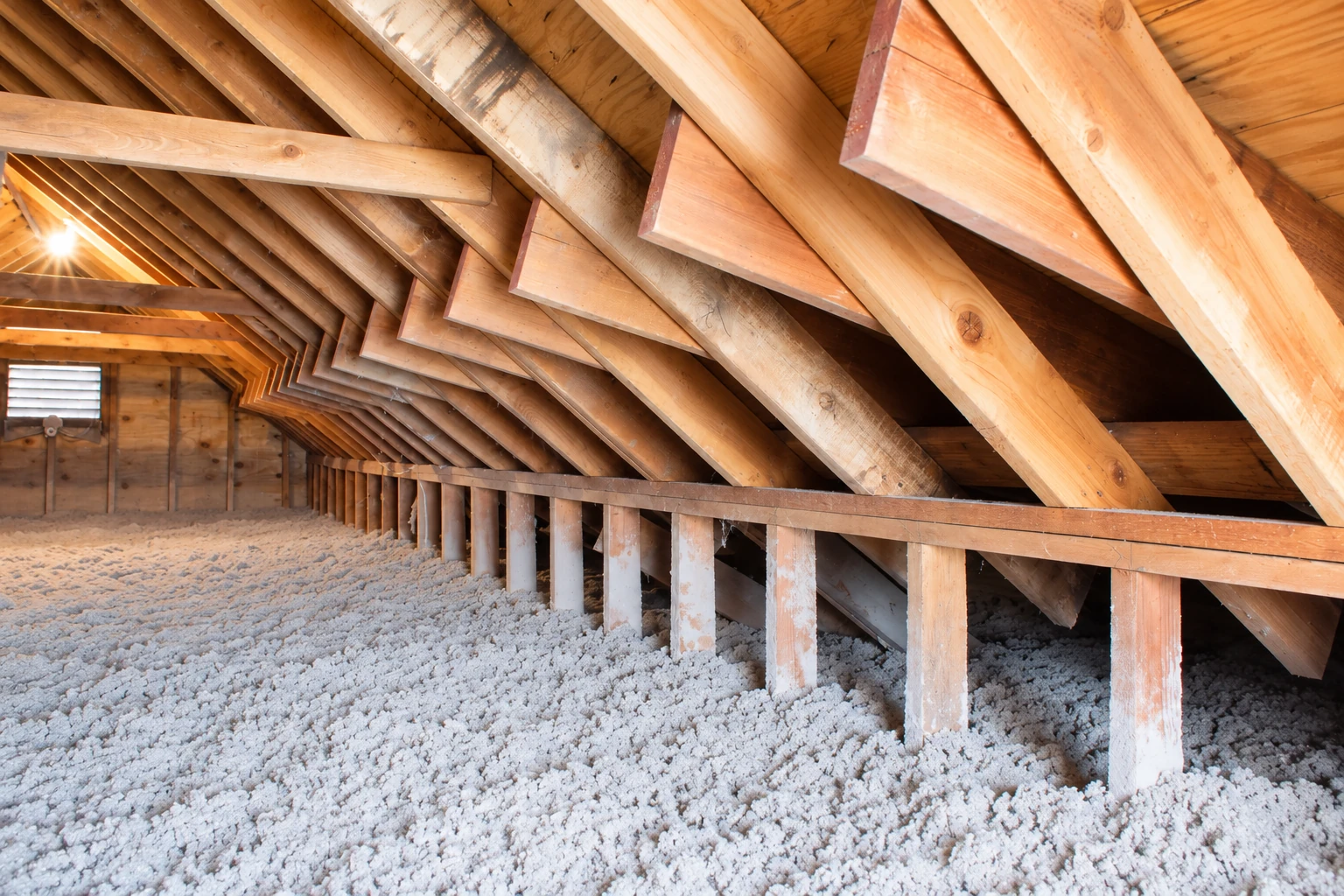
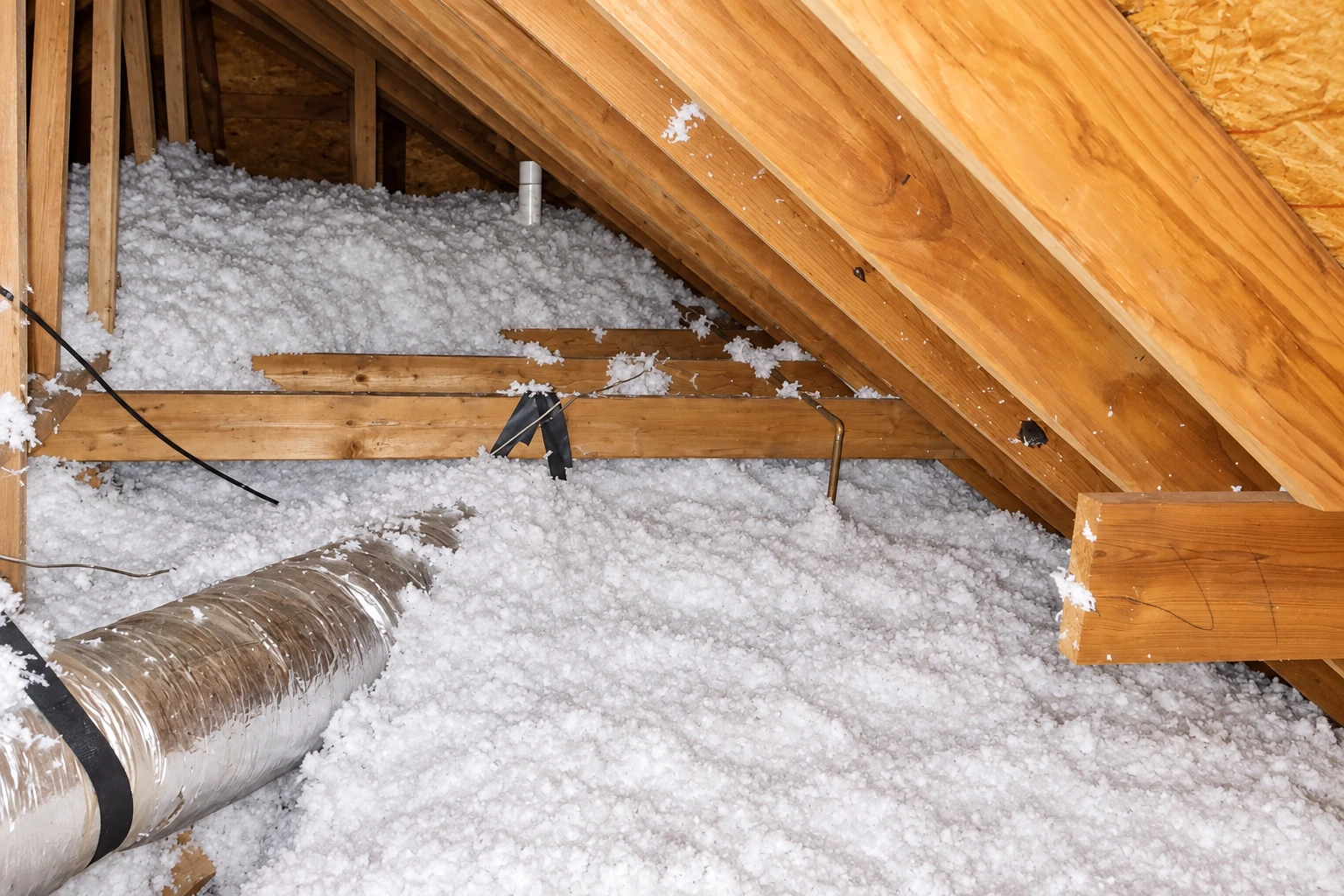
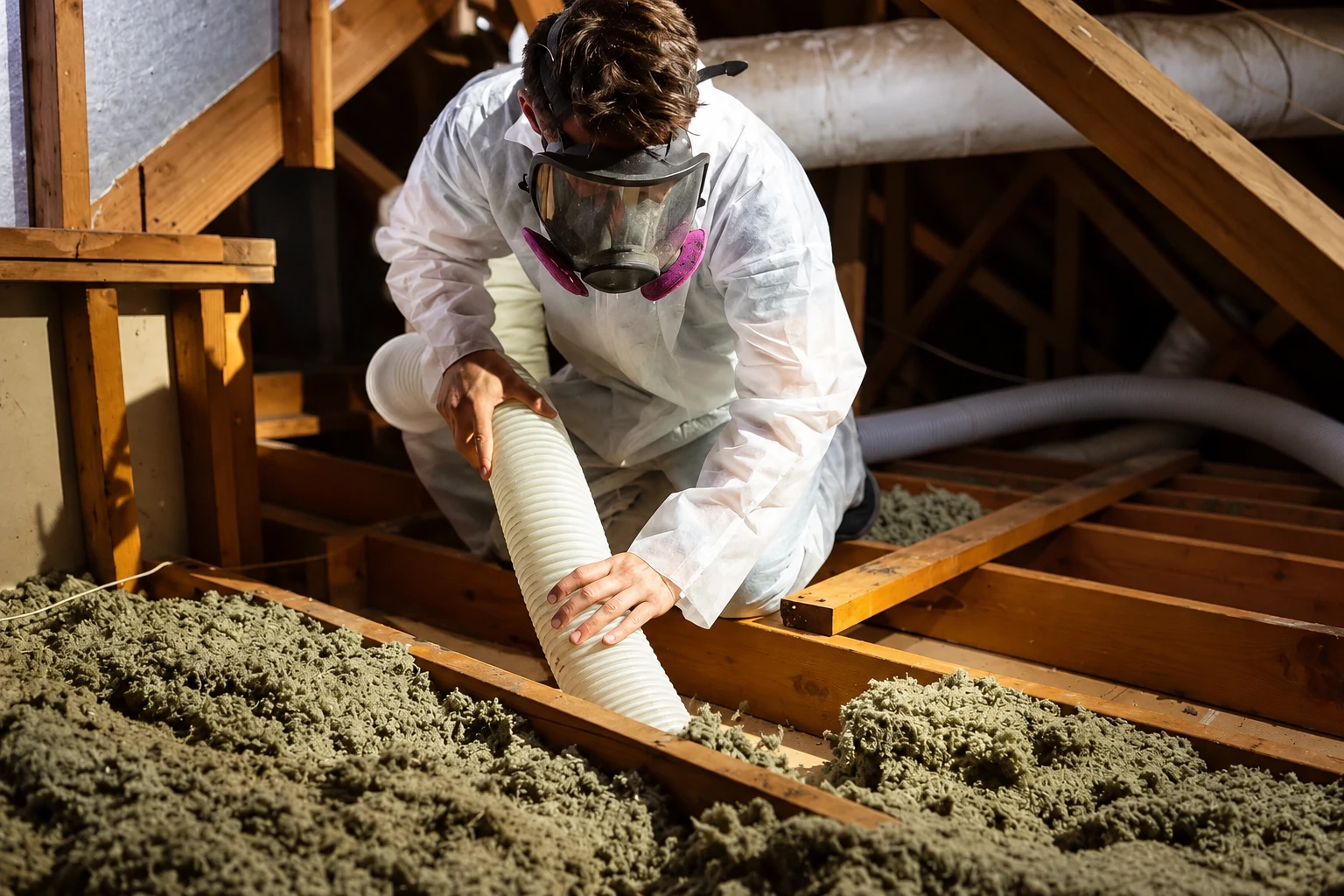
Blown-in insulation is loose cellulose or fiberglass blown through a hose onto your attic floor, and in Bozeman we put it into existing vented attics after the gaps in the ceiling are sealed, so the house holds its heat better.
Most calls start with a cold bedroom, a hot upstairs in summer or an attic nobody has looked at in years. Loose fill settles in around joists, wires and odd corners, so it suits an attic that's thin or patchy, but it won't fix whatever is already wrong underneath it, which is why we look first.
The price turns on how big the attic is, how many inches are already up there, which material you pick and what has to be fixed before anything gets blown in. The schedule turns on those same fixes, since soaked insulation or old wiring has to be dealt with first, and your estimate puts both in writing for your house.
- Cellulose or fiberglass, blown loose so it fills around joists, wires and awkward corners.
- Old insulation can usually stay if it's dry and clean, and comes out if it isn't.
- Fully licensed and insured, with a small crew led by a lead installer doing the work.
What happens after you call us about blown-in insulation?
Here's how a blown-in job runs, from the first call to the walk-through at the end. You'll know what we found and what we plan to do before anyone climbs up there with a hose.
Call or send the form
You call (406) 414-0411 or fill out the form, and we get back to you to find a time that works. It helps to tell us how old the house is and how you get into the attic.
I look at the attic
I come out myself and check the inches already up there, the vents at the eaves and anything that has to be fixed first. If I find something that can't be covered, I'll show you before we talk about anything else.
You get a written estimate
The estimate says what we'd do, in what order and why, so you can see what the money covers before you decide anything. If a repair has to come first, you'll see it there, not halfway through the job.
We finish and walk through
Our crew, led by a lead installer and with me on most jobs, does the work and picks up after itself. When it's done, we walk through the attic with you.
What a blown-in attic job looks like
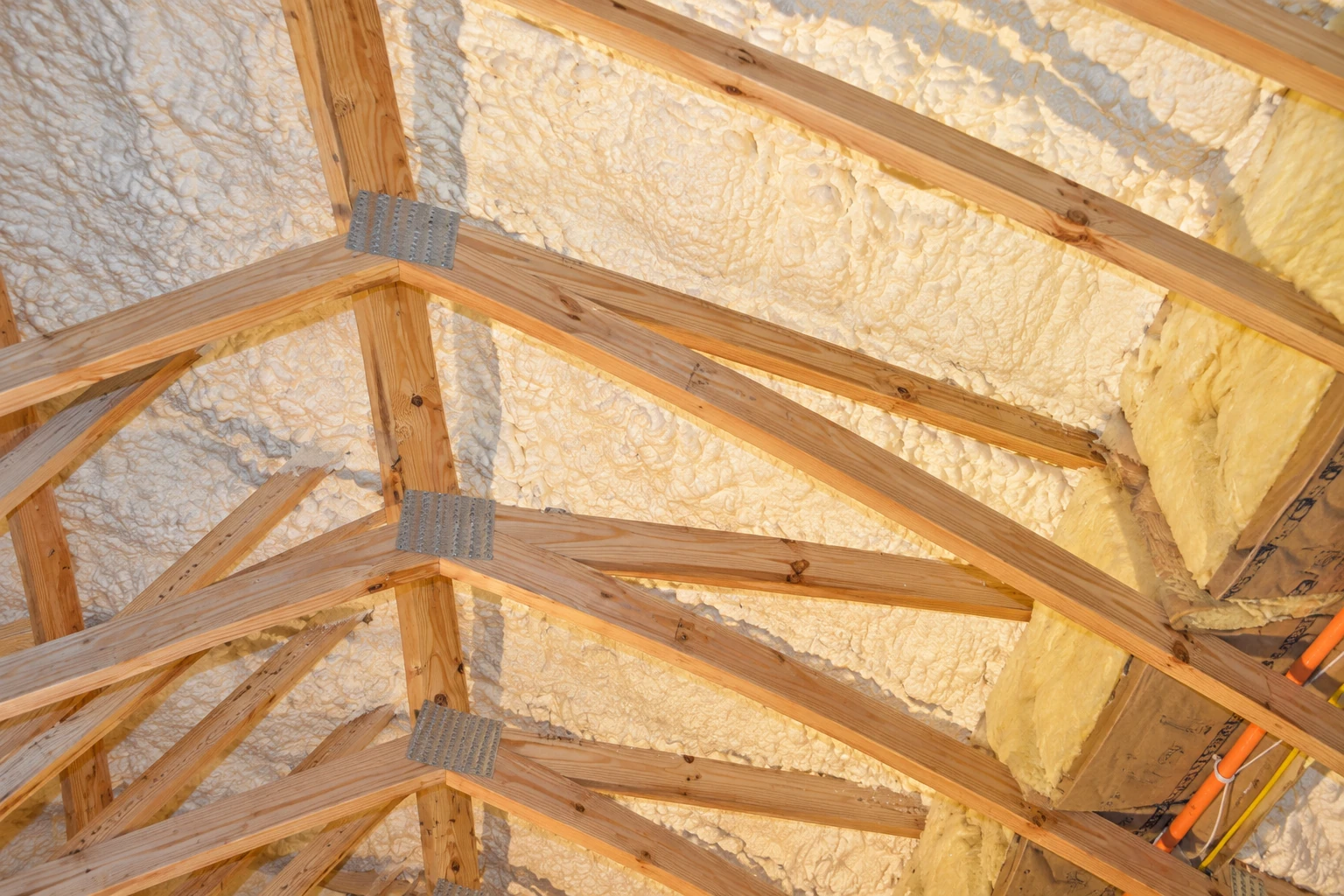
These photos show the trade in general, from sealed openings and clear eave vents to an even layer of fill across the attic floor. They're examples of the work, not pictures of a particular house.
Thick white spray foam coats the underside of a roof, covering the rafters and a crossbeam.
White spray foam fills the roof framing around exposed wooden beams and bundled black cables.
A crawl space has a white vapor barrier across the floor, insulated walls, black ductwork, and exposed plumbing.
Foam insulation fills the wall cavities between exposed wooden studs in an unfinished room.
A sloped attic is coated in thick white spray foam around a central support post and small window.
A basement has insulated walls and ceiling, exposed ductwork, windows, and utility equipment.
Get a free look at your attic and a written plan
We reply within one business day, then I come out for a free on-site estimate with no obligation. Mention your home's age, how you get into the attic and any signs of vermiculite or knob and tube wiring.
(406) 414-0411Blown-in insulation questions we hear in Bozeman
These are the questions Bozeman homeowners ask most before they add blown-in insulation to an attic. If yours isn't here, ask when we come out to look at the space.
Is cellulose or fiberglass better for blown-in attic insulation?
Fiberglass is the better pick if you want the depth to hold, and cellulose is the better pick if price and draft control matter more. Loose-fill cellulose settles about 10 to 20 percent over time and breaks down if it gets soaked, while loose-fill fiberglass settles only 2 to 4 percent but costs more and doesn't slow air moving through it as well. Cellulose is also fairly heavy, so it isn't recommended for mobile home ceilings or floors.
How much does blown-in insulation cost compared to batts?
Blowing loose fill into an attic usually costs less than laying batts, and it gives better coverage too. Fiberglass fill runs higher than cellulose, and your price also moves with the attic's size, the inches already there and anything we have to fix first. Your written estimate gives you the figure for your house.
How do I deal with old vermiculite before adding attic insulation?
Don't blow new insulation over it or stir it up, because it either stays undisturbed or a trained professional takes it out. The EPA advises treating any vermiculite as if it came from Libby and contains asbestos, and just covering it with new insulation isn't recommended. If I see it on the visit, it goes first in the plan, and everything else waits on that.
How much attic insulation does Montana recommend?
The state's homeowner guidance says the latest recommendations call for ceilings insulated to R-49, a measure of how well the layer slows heat. Blown attic insulation should meet or exceed what current building codes require, so we measure the inches you already have and work out what it takes to get there.
Does an insulation contractor need a license in Montana?
Yes, all construction contractors in Montana now have to be licensed with the Montana Department of Labor & Industry. We're fully licensed and insured, and it's fair to ask any contractor you're comparing for theirs.
What causes ice dams, and can blown-in insulation help?
Ice dams usually start when heat leaks into the attic, warms the roof and melts snow that refreezes at the colder edge. A properly sealed and insulated attic can help prevent them, which matters on a roof that carries snow through a Bozeman winter. Sealing comes first, since insulation alone won't stop warm air slipping through the gaps.
Blown-in insulation in older Bozeman houses
In older Bozeman houses we check the wiring first, because knob and tube, an old two-wire system, shouldn't be covered with insulation. We do the same checks in Belgrade, Livingston and other cities nearby.