Commercial insulation in Bozeman, MT - a building that stays warm and dry inside
Frost under the roof panels or a cold wall in the office? We fix what's causing it first, then insulate so the building stays dry.
How do you insulate a commercial building in Bozeman without trapping moisture?
Commercial insulation in Bozeman means sealing and insulating the roof and walls of a shop, office or warehouse so the inside surfaces stay warm enough that moisture doesn't condense on them, and the building stays dry and costs less to heat.
Most calls start with something you can see: frost or drips under the roof panels in January, a cold wall in the office, a power bill that keeps climbing. Sometimes there's old insulation that's been wet for years, and that has to come out before anything new goes in, which is where insulation removal comes in.
The price moves with the building's size, its roof type and framing, and how much has to be fixed before anything gets covered. The schedule turns on whether a permit and inspection are needed and on working around your business hours, and your written estimate spells out what we'd do for your building and in what order.
- Roofs, walls and the gaps between them on shops, offices, warehouses and other working buildings.
- Finding and fixing wet or damaged insulation before anything new gets laid over it.
- Working around your staff, tenants and equipment, and picking up after ourselves when we're done.
What happens after you call about your building?
Here's how a commercial job runs with us, from the first call to the walk-through. I look at every building myself before we write anything up, because the problems have to be found before they get covered.
Call or send the form
Call (406) 414-0411 or send the form, and we'll get back to you to set a time. Have your roof type and framing handy, since that tells me a lot before I get there.
I look at the building
I come out and go over the roof, walls, framing and any crawl space or basement in person. Anything that has to be fixed before insulation goes in gets noted, because covering a problem only hides it.
You get a written estimate
The estimate says what we'd do, in what order and why. You see the full scope before any work starts, so you know what you're paying for.
We work, then walk through
A small crew led by our lead installer does the job, and I'm on most of them too. When it's done, we walk through the finished work with you.
What commercial insulation work looks like up close
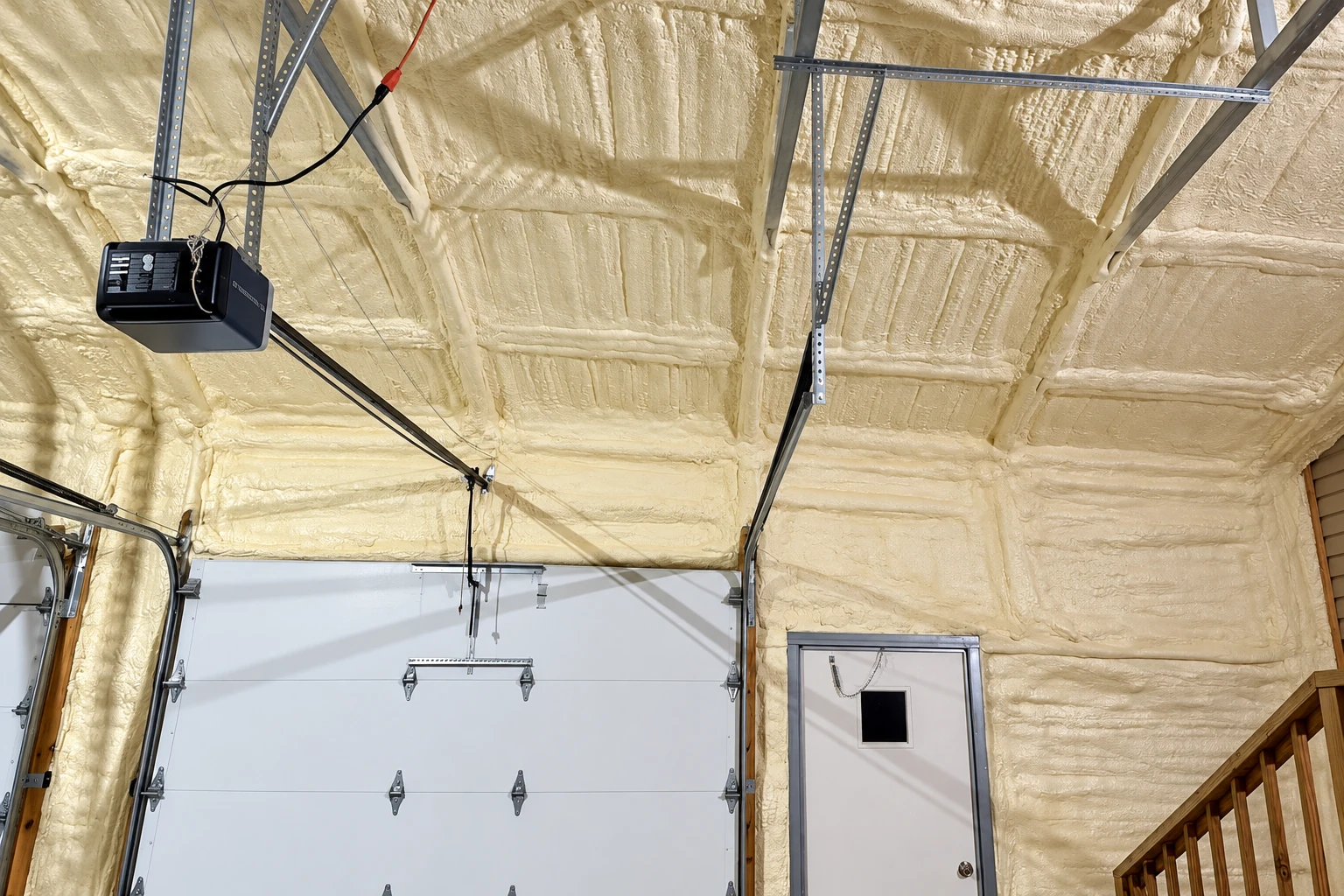
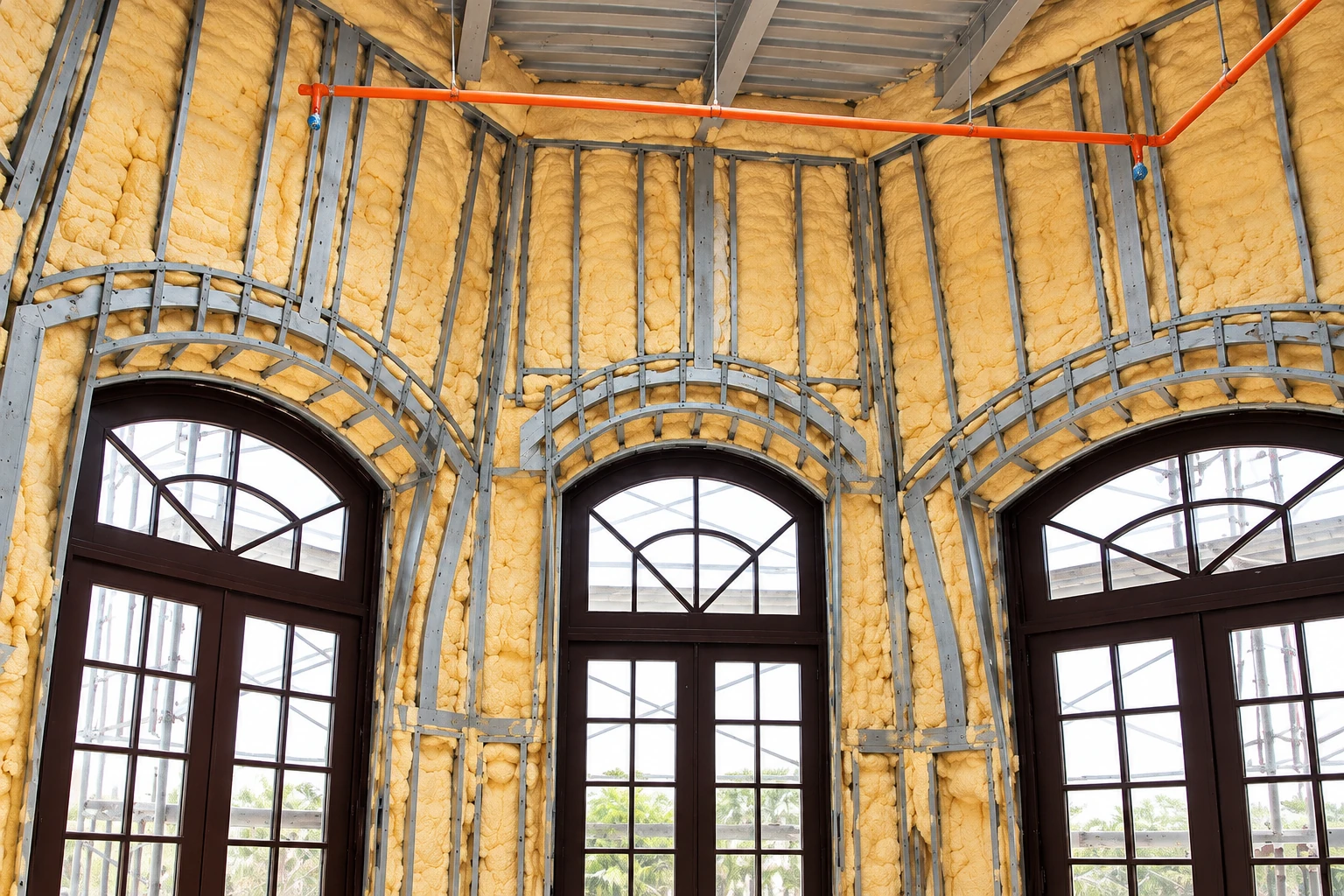
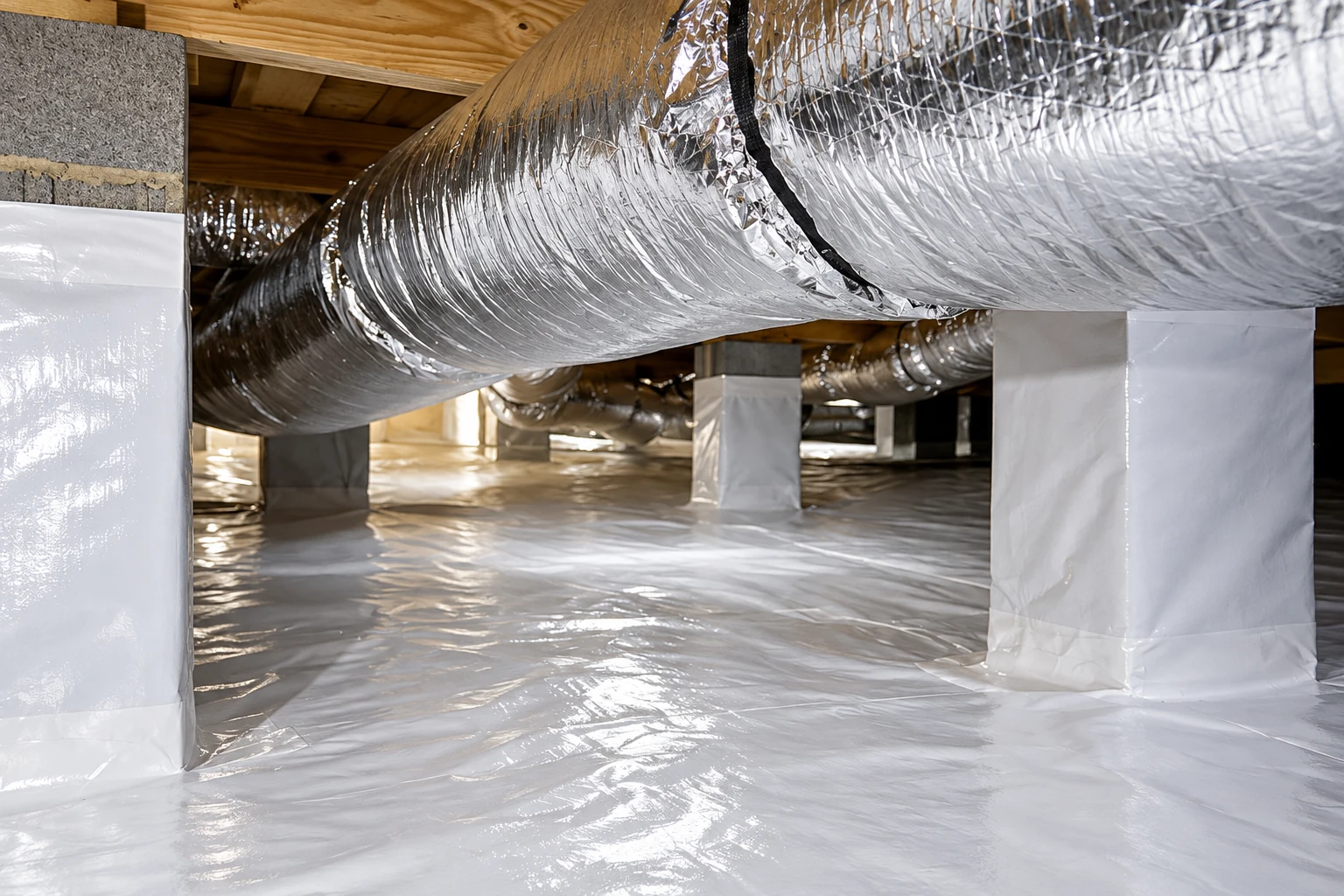
These photos show the kind of work that goes into insulating a working building, from roof decks to wall framing. They show the trade in general, not particular jobs of ours.
Thick white spray foam coats the underside of a roof, covering the rafters and a crossbeam.
White spray foam fills the roof framing around exposed wooden beams and bundled black cables.
Loose-fill insulation blankets an attic floor beneath exposed wooden roof trusses.
White spray foam covers the roof sheathing between exposed wooden trusses in an attic.
A worker in protective gear guides a large hose through loose attic insulation during removal.
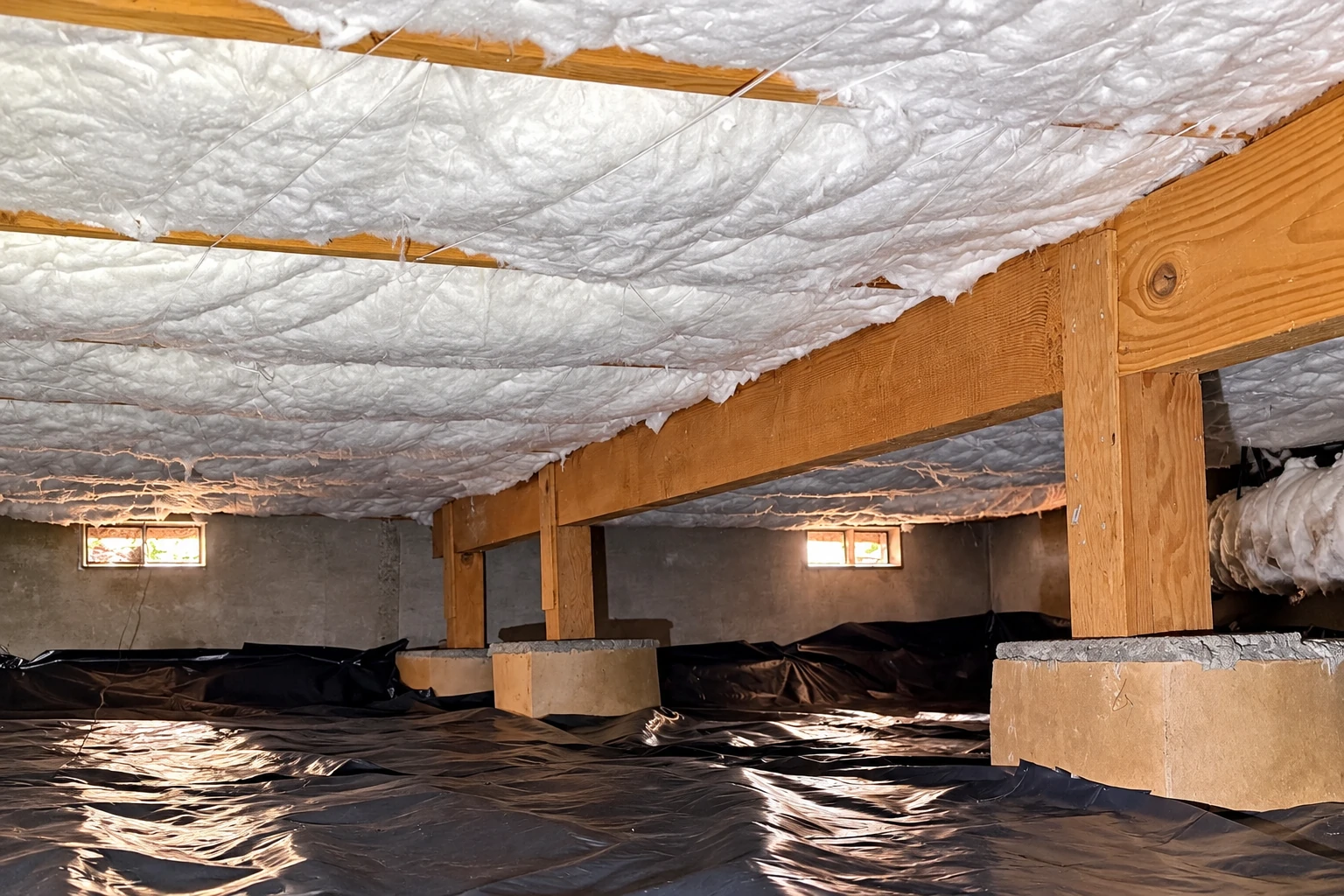
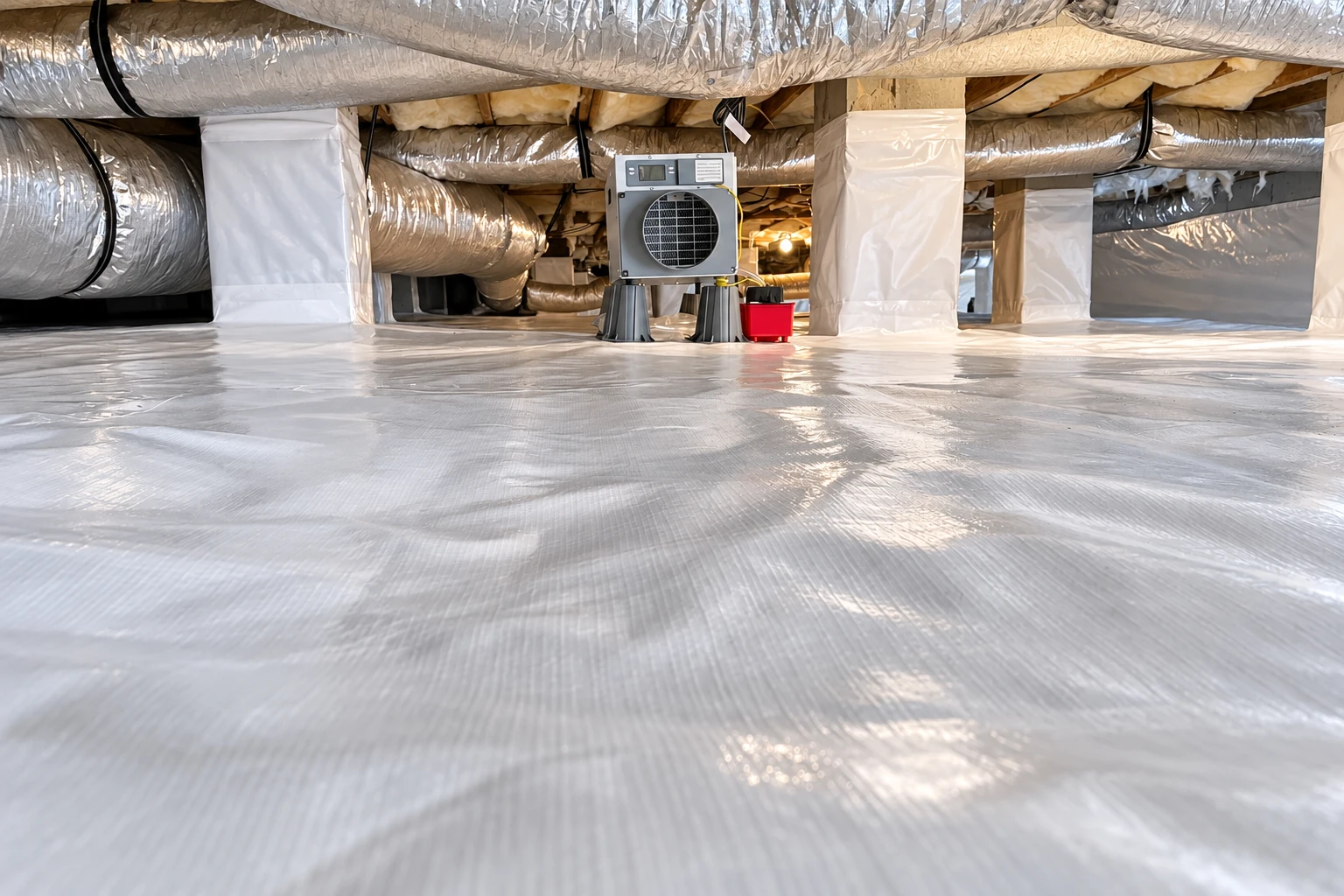
A crawl space has a white vapor barrier across the floor, insulated walls, black ductwork, and exposed plumbing.
Get a written plan for your building's insulation
Send the form or call (406) 414-0411 with your roof type, framing and building size, and we'll reply within one business day. I'll come out for a free look on site, and the written estimate comes with no obligation.
(406) 414-0411Questions about commercial insulation in Bozeman
These are questions property managers and business owners in Bozeman often ask before a commercial insulation job. If yours isn't here, give us a call, since the building's roof and framing usually decide the answer.
How much does commercial insulation cost in Bozeman?
The cost comes down to the building's size, its roof type and framing, and how much has to be fixed before anything gets covered. Wet insulation that has to come out, a lot of air sealing, tight access around equipment, or a steel frame that needs extra attention all add to it, while an open, dry space with a sound roof keeps it lower. Your written estimate lays out the work and its order, so you can see what's driving your number.
What causes moisture problems in commercial roofs and walls?
Air leaking through the building is usually the main way moisture gets into commercial roofs and walls. Warm indoor air carries water vapor, and when it reaches a cold surface, like a roof deck that isn't kept warm enough, it condenses there. Vapor seeping straight through materials can matter too, mostly in very humid spaces or ones closed up tight, which is why sealing air leaks counts as moisture control and not just comfort.
What causes condensation in a steel building that's already insulated?
Steel framing, anchors and fasteners carry heat out fast enough to chill the inside surfaces, so moisture in the room condenses on them. That can happen even when the insulation meets the required level, so in a steel building the metal paths need attention, not just more inches.
What is the best way to place a vapor retarder in a cold climate like Bozeman?
In places with cold winters, one insulation trade group advises putting the vapor retarder, the moisture-slowing layer, on the inner side of the wall, near the warm room. A building science firm points out the catch, which is that a barrier on the inside stops the wall or roof from drying inward, and that can be a problem in any air-conditioned building. Where it goes is worth working out for your building before it's installed.
Who is allowed to do commercial insulation work in Montana?
All construction contractors in Montana have to be licensed with the Montana Department of Labor & Industry, and we're fully licensed and insured. If you're hiring a solo installer, the state requires them to hold either an independent contractor exemption certificate or their own self-elected workers' comp coverage, so it's fair to ask which one they have.
Which building code applies to a Bozeman commercial project in 2027?
Bozeman permit applications submitted on or after January 1, 2027 have to be designed under Montana's updated building codes. If your plans are drawn now but you won't apply until the new year, that date decides which code they follow. The city also offers 30-minute appointments every day with its commercial plans examiners for code or permit questions, which you can book from the city's building page.
Commercial insulation in Bozeman and nearby cities
In Bozeman, city inspectors need to see anything a remodel will cover before it's closed up, so we check with the building office on each job and handle the permit when one's needed. We see plenty of steel shops and metal roofs around here, and we do the same work in Belgrade and Livingston.